Yes, there are specific regulations governing the inspection of structural problems in social housing:
- The Social Housing Regulation Act introduces new requirements for social housing landlords related to safety inspections and repairs.
- Under the new regulations effective April 1, 2024, social landlords must:
- Have an accurate, up-to-date record of the condition of all their properties based on physical assessments
- Investigate reported hazards like damp and mould within 14 calendar days
- Provide a written assessment within 14 days detailing the hazard, solution, and repair timeline
- Begin repair work within 7 days for significant health/safety risks
- Complete emergency repairs within 24 hours
- The Regulator of Social Housing can now conduct routine inspections of social housing properties with 48 hours’ notice.
- Social landlords are required to comply with all applicable health and safety legal requirements, including those related to structural safety.
- The Regulator can issue unlimited fines to landlords who fail to meet the required standards for structural safety and repairs.
- Landlords must assess the condition of homes frequently enough to maintain assurance on their quality and safety.
These regulations aim to ensure social housing providers proactively identify and address structural issues to maintain safe, decent homes for tenants.
7 Common Structural Problems Solved
Cracking internally or externally
- Bulging or leaning walls
- Settlement of foundations
- Sloping floors
- Dampness or mould arising from structural defects
- Outbuildings moving away from main building
- Defects due to trees or drains
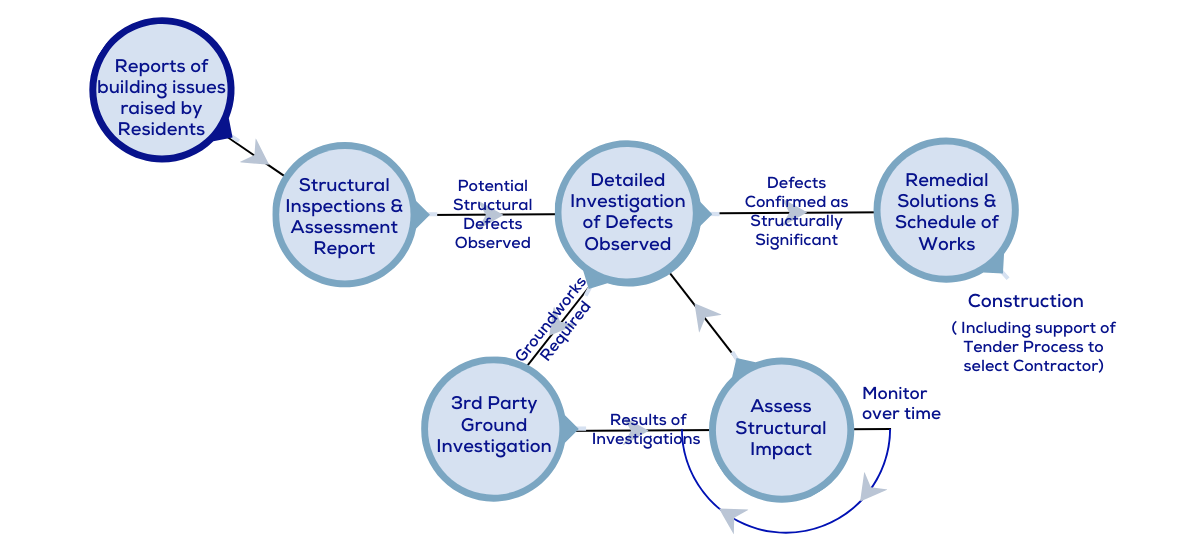
How we help identifying a solution.
Find out more by chatting with one of our Engineers on 01625 548551 or email team@francisbradshaw.co.uk